Showing posts sorted by relevance for query paint the town. Sort by date Show all posts

Sunday, July 24, 2022

Montgomery Art Association’s annual Paint the Town Labor Day Show

I am honored to serve as 2022 judge of one of the region’s largest and longest-running art shows over Labor Day Weekend: the Montgomery Art Association’s annual Paint the Town Labor Day Show at the Historic Armory in Kensington, Maryland

I will review more than 500 works in seven categories at the Montgomery Art Association’s annual Paint the Town Labor Day Show at the Historic Armory in Kensington, Maryland. I also will judge the one-day Kensington plein air painting competition and will present prizes at the September 3 reception.

The annual art show runs for three days—September 3-5—and features hundreds of pieces of artwork by member artists. Original paintings, drawings, sculptures, and photography—plus prints and notecards—will all be for sale. A portion of proceeds goes in support of MAA’s educational mission.

The show is accepting entries from artists 18 years or older in Maryland, Virginia, and DC. MAA annual membership is required to participate. In addition to the main show, MAA will host its annual plein air competition. Members, plus adults and children from the community, are invited to participate and have up to eight hours to complete a work within the boundaries of Kensington. Free for children and members, and $10 for non-member adults.

About MAA: The Montgomery Art Association (MAA) is a Maryland-based nonprofit membership group supporting the visual arts and artists in the DC area. A portion of sales goes to support our educational mission, including providing scholarships to art students. Learn more.

About the Show: The annual three-day Paint the Town Labor Day Show will take place at the Kensington Historic Armory, 3710 Mitchell St., Kensington, MD, September 3-5. The event is free and open to the public. The Town of Kensington is a proud sponsor.

Register here.

Sunday, June 26, 2022

I will judge this year’s "Paint the Town" Labor Day Show

It will be soon announced that yours truly will be the judge for this year’s "Paint the Town" Labor Day Show sponsored by the Montgomery Art Association

The Paint the Town Labor Day Show is one of the region’s largest and longest-running art shows composed of all local artists. The show will be open to the public Saturday-Monday, September 3-5, and I will do both the closed-door judging and then and on Saturday, September 3, I will also judge the plein air competition and then present the awards. 

"Paint the Town" Labor Day Show sponsored by the Montgomery Art Association

About the Plein Air Competition: As you walk around Kensington on the Saturday of the show weekend, you'll see dozens of artists painting and drawing all over town. Those are participants of the annual Plein Air Competition. From 7 am-3 pm, adults and children complete paintings with a Kensington theme and submit them for prizes awarded by me. The competition is open to all adults and children. Free for children under 18 and current MAA members; adults pay $10 per person. Registration opens July 15.

Details here.

Schedule 

FRIDAY, JULY 15: Call for entries opens (members only)

SATURDAY, SEPTEMBER 3: Exhibit floor open 11 a.m.-5 p.m. and Plein air art competition, 7 a.m.-3 p.m. -- Awards ceremony, 6-8 p.m.

SUNDAY, SEPTEMBER 4: Exhibit floor open, 11:00 a.m.-5:00 p.m. 

MONDAY, SEPTEMBER 5: Exhibit floor open, 10:00 a.m.-5:00 p.m. Pick up purchased artwork, 5:00-8:00 p.m.

TUESDAY, SEPTEMBER 6: Pick up purchased artwork, 9-11 a.m. 

Monday, July 25, 2022

The Paint the Town Labor Day Show

I will be the judge for this year’s "Paint the Town" Labor Day Show sponsored by the Montgomery Art Association

The Paint the Town Labor Day Show is one of the region’s largest and longest-running art shows composed of all local artists. The show will be open to the public Saturday-Monday, September 3-5, and I will do both the closed-door judging and then and on Saturday, September 3, I will also judge the plein air competition and then present the awards. 


About the Plein Air Competition: As you walk around Kensington on the Saturday of the show weekend, you'll see dozens of artists painting and drawing all over town. Those are participants of the annual Plein Air Competition. From 7 am-3 pm, adults and children complete paintings with a Kensington theme and submit them for prizes awarded by me. The competition is open to all adults and children. Free for children under 18 and current MAA members; adults pay $10 per person. Registration opens July 15.

Details here.

Schedule 

FRIDAY, JULY 15: Call for entries opens (members only)

SATURDAY, SEPTEMBER 3: Exhibit floor open 11 a.m.-5 p.m. and Plein air art competition, 7 a.m.-3 p.m. -- Awards ceremony, 6-8 p.m.

SUNDAY, SEPTEMBER 4: Exhibit floor open, 11:00 a.m.-5:00 p.m. 

MONDAY, SEPTEMBER 5: Exhibit floor open, 10:00 a.m.-5:00 p.m. Pick up purchased artwork, 5:00-8:00 p.m.

TUESDAY, SEPTEMBER 6: Pick up purchased artwork, 9-11 a.m. 

Tuesday, June 15, 2021

My picks for Paint It! Ellicott City 2021

 As June arrives, I’m beginning to think that perhaps the Covidian monster has been tamed, art fairs are desperately seeking galleries to apply to show, the DMV’s outdoor art festivals are returning, and brushes, pens and pencils continued to be applied to paper or canvas. Notice that I did not mention cicadas or Brood X or none of that 17-year nonsense that feeds other papers’ pages these day.

Restaurants, museums, bars, and libraries are allegedly open, except in Montgomery County, where Kommissar Marc Elrich curiously has kept his iron boot on the throat of the county’s attempts to come back to life… and most libraries remain closed

Plein Air painting has always been a refreshing genre of art production, and our area boasts some of the best plein air painting events, perhaps none better than the one held in Easton, but one a bit closer to the DMV and just as good is and a lot closer is the one in Ellicot City.

In that annual event, artists from around the region gather in Ellicott City – this year the weekend of June 10-13 -- for Paint It! Ellicott City 2021.

This year, the Howard County Arts Council (HCAC) and Visit Howard County have partnered to host this paint-out weekend culminating in an exhibit of 30 juried artists at the Howard County Center for the Arts.

The guest juror for Paint It! Ellicott City 2021 is award-winning landscape artist Lynn Mehta, who selected the following artists for the juried exhibit: Lissa Abrams, Bruno Baran, Pamela Betts, Julia Bowden, Cathy Cole, Shawn Costello, Ann Crostic, David Drown, Vlad Duchev, Kathleen Gray Farthing, Kathleen Ryan Gardiner, Erin Gill, Marita Hines, Nishita Jain, Rajendra KC, Jane Knighton, Kathleen Kotarba, Michael Kotarba, Laura Martinez-Bianco, Michael McSorley, Amanda Milliner, Christine Rapa, Tom Ritchie, J. Stacy Rogers, Duane Sabiston, Maggii Sarfaty, Stacey Sass, Lida Stifel, Nancy Thomas, and Nancy Van Meter.

The event begins with a virtual Welcome Reception & Event Kick-Off via Zoom on Wednesday, June 9 at 4pm. Then, all day on June 10-13, artists will set up their easels throughout Ellicott City’s historic district to capture the picturesque charm of the beloved mill town. Members of the public are invited to watch the artists at work from a safe distance while strolling Main Street. Artists and art students from the community can also be part of the fun by participating in the Open Paint-Out, which takes place concurrently. Artwork created during the Open Paint-Out will be featured in a temporary exhibit at the Visit Howard County Welcome Center on Main Street.

A virtual reception on Friday, June 18 from 6-7pm will include an award ceremony for the exhibit of juried artists’ work. More than $7,000 in awards will be presented, including the coveted Gino Awards, two $1,000 cash prizes named in honor of artist Gino Manelli and presented by the Manelli Famil

Other awards include a $500 award sponsored by Patapsco Heritage Greenway, a $500 award by Blossoms of Hope, and a $150 Open Paint award sponsored by the Family of Carole Zink.

Registration is required for those wishing to be included in the Open Paint-Out exhibit. Registration is available at the Arts Council and online at hocoarts.org/paint-it before and during the event.

Awright… you didn’t think that was all… did you? Here what I’m gonna do now: even though this event hasn’t happened as my talented hand type this column, I’m gonna take the extraordinary risk of looking at some of these artists’ online footprint and pick out a few faves.

Kathleen Kotarba’s online presence shows me an artist who really understands the powerful effect which light can deliver at the hands of a talented artist. Her paintings are infused with the ever fluid colors of light at different times of the day, as it touches grass, wood, flowers, trees, people.

Laura Martinez-Bianco is also formidably armed with those same skills as well as a very advanced ability to capture the nuances of light on water and the living nature of water itself. This talented artist also knows her composition, and is one of my favorites to win the top prize at Ellicot City.

Duane Sabiston also stood apart. I like the manner in which his brush takes chances with bold statements in seriously contrasted painting areas within the canvas.

J. Stacy Rogers is another artist who will win an award; enviable technical skill, an eye for the unusual in the landscape and a limitless ability to interpret what most of us “see” when we look at color.

Who else did I like online? Rajendra KC can paint weather variations in the atmosphere with astonishing loose detail! Do not be fooled… only a master can do that.

Nancy Van Meter will also win a prize, maybe the top prize; she’s a professional with almost supernatural talent.

I admire the way in which Maggii Sarfaty goes on trying different things and ways and manners to deliver her art! That is a courageous (and enviable) sign of artistic courage that most artists lack. Sarfaty will not fall into the trap of getting comfortable with any success – she will then knock on another artistic barrier and knock it down. Of all the artists in this event, her work is the one that I am looking the most to discover.

Monday, August 15, 2022

"Paint the Town" Labor Day show in Kensington

 I will be the judge for this year’s "Paint the Town" Labor Day Show sponsored by the Montgomery Art Association

The Paint the Town Labor Day Show is one of the region’s largest and longest-running art shows composed of all local artists. The show will be open to the public Saturday-Monday, September 3-5, and I will do both the closed-door judging and then and on Saturday, September 3, I will also judge the plein air competition and then present the awards. 


About the Plein Air Competition: As you walk around Kensington on the Saturday of the show weekend, you'll see dozens of artists painting and drawing all over town. Those are participants of the annual Plein Air Competition. From 7 am-3 pm, adults and children complete paintings with a Kensington theme and submit them for prizes awarded by me. The competition is open to all adults and children. Free for children under 18 and current MAA members; adults pay $10 per person. Registration opens July 15.

Details here.

Schedule 

FRIDAY, JULY 15: Call for entries opens (members only)

SATURDAY, SEPTEMBER 3: Exhibit floor open 11 a.m.-5 p.m. and Plein air art competition, 7 a.m.-3 p.m. -- Awards ceremony, 6-8 p.m.

SUNDAY, SEPTEMBER 4: Exhibit floor open, 11:00 a.m.-5:00 p.m. 

MONDAY, SEPTEMBER 5: Exhibit floor open, 10:00 a.m.-5:00 p.m. Pick up purchased artwork, 5:00-8:00 p.m.

Sunday, September 04, 2022

The 2022 Paint the Town Award Winners!

It was my distinct and unique honor to serve as the 2022 Paint the Town juror for the Montgomery Art Association, which together with the town of Kensington, Maryland stages this annual visual art exhibition and competition each year in beautiful Kensington, just outside of the District.

This was a very difficult show to juror - both the open exhibition at the Kensington Armory and the plein air competition which took place yesterday all over this beautiful Maryland town outside nearby Washington, DC.  Below are the award winners selected by me - congratulations to all of them... it was a really difficult competition!

Let me repeat myself: as all great shows are, this was an immensely difficult show to judge, which is a good thing! The quality of entries was uniformly superior in almost every category, and the difference between first, second, third, and even some honorable mentions was minimal. The Portrait category in particular was tough to judge as there were so many really outstanding entries. And I was especially surprised by the Kensington category – there was not a single bad entry! As always, I am honored to be able to judge and comment on work of my fellow artists.

Kensington Category

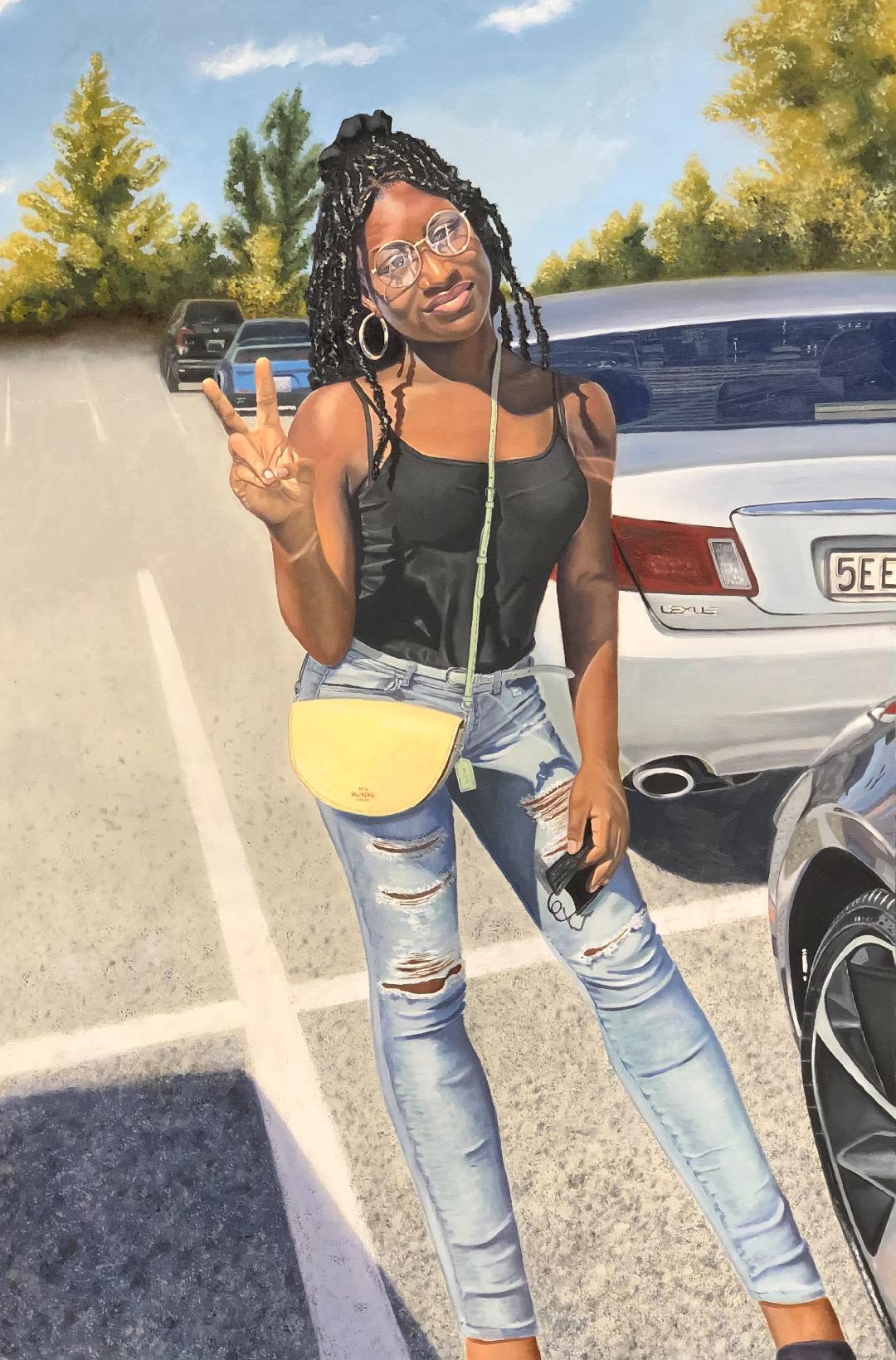
1st Place & Best in Show (Bertha Clum Award): Historia Est Magistra Vitae by Dora Patin

Historia Est Magistra Vitae by Dora Patin

2nd Place: The Hard Work by Paula Zeller

3rd Place: Early Morning on the MARC by Barbara Mandel

Honorable Mentions: Light Remains by Virginia Browning; At the Station by Susan Fitch Brown; Cedar Lane, 3 am by David Sommers

Landscape Category

1st Place: Golden Cloud by Sarah Clayton Davis

Golden Cloud by Sarah Clayton Davis

2nd Place: Vaison La Romaine, France by Mary Vinograd

3rd Place: Water Meadows, Woodfield Road by Benita Kane Jaro

Honorable Mentions: Time Out by Margaret Ingram; Winter by Rajendra KC; Isle of Capri by Deborah Pollack; Tempest by Ting Rao; The House Before the Storm by My-Linh Rouil; Nature's Sculpture by Yik Chek Phan

Portrait Category

1st Place: I Will Conquer by Isabella Martire

I Will Conquer by Isabella Martire

2nd Place: You Are Gone and That Scares Me by Ally Morgan

3rd Place: Summer Morning by Ting Rao

Honorable Mentions: Glow by Jennifer Lynn Beaudet; Gaby Is Musing by Nan Dawkins; Playing the Blues by Karen Merkin; Weathered by Ellen Yahuda; Stock Up Time by Vicky Zhou

Still Life Category

1st Place: Veri Peri Macaron by Jennifer Barlow

Veri Peri Macaron by Jennifer Barlow

2nd Place: A Bear Necessity by Amanda Coelho

3rd Place: Waiting for Wings by Christina Webber

Honorable Mentions: Chatty Onions by Nan Dawkins; Roses Ride by Jack Hammond

Abstract Category

1st Place: Metamorphosis by Sandra Pérez-Ramos

Metamorphosis by Sandra Pérez-Ramos

2nd Place: Rhapsody of a Hug by Martina Sestakova

3rd Place: Crows by Nancy Randa

Honorable Mentions: Composition 29 by Mari Craig; Coastal Dreams by Rosemary Fallon; Happy Wave by Raya Salman; Exploration by Jenny Wilson

Sculpture Category

1st place: Patchwork of Promise by Peijisan Art

Patchwork of Promise by Peijisan Art

2nd Place: A Much Needed Break by Samantha Hecox

3rd Place: Ice Bucket by Nadia Hewchuck

Honorable Mention: Fort! by Anastasia Walsh

Photography Category

1st Place: The Gymnast by Arindam Dasgupta

The Gymnast by Arindam Dasgupta

2nd Place: Warbler House by Julie Steinberg

3rd Place: Snow Day by Regina Boston

Plein Air Competition

1st place: Saturday Market by Vicky Zhou

Saturday Market by Vicky Zhou

2nd place: OK Morning! by Robert Pearlman

3rd place: Water Fountain by Carrie Adler

Honorable mentions: Professor by Holly Buehler; Outdoor Seating, Kensington by Garine Magary

Student Invitational

Winner: The Bearer by Elielle Kayomb

The Bearer by Elielle Kayomb

2nd Place: Hammer Brooch by Nadia Hewchuck

3rd Place: A Gazelle in the Water by Stephanie Fernandez

Friday, July 24, 2015

"Paint the Town" Mural Project

"Paint the Town" Mural Project
Deadline: July 31, 2015

Receive $15,000 to transform the Capital Crescent Trail Retaining Wall!
 
"Paint the Town" is an initiative to promote more public art murals in downtown Bethesda. The first public art mural project organized by the Bethesda Arts & Entertainment District is the Capital Crescent Trail Retaining Wall located on Arlington Road, by Bradley Boulevard and across from the Safeway grocery store.

The Capital Crescent Trail Retaining Wall is more than 400 feet in length, and artists are encouraged to focus their proposed mural on the 150-200 feet in the middle of the wall. The height of the wall is approximately 10 feet in height.

$15,000 will be provided to the artist to pay for supplies and the artist's time. The deadline to apply is Friday, July 31, 2015. Interested artists should visit www.bethesda.org for more information and the application for consideration. The project must be completed by Oct. 15, 2015.

Sunday, March 01, 2009

Sedona, Arizona

While I am airborne heading West to Sedona, AZ, I thought that it may be a cool idea to rehash some of my older thoughts on that area for all the newbies to the blog.
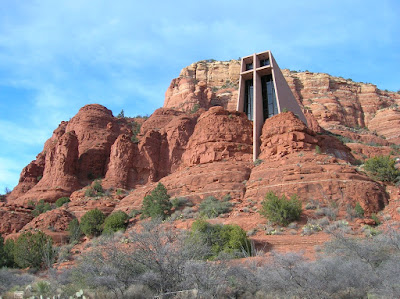
Sedona ChurchWhile there's no doubt on the planet that Sedona, Arizona is one of the most beautiful places on the planet, as I discovered while visiting there the last two years, it is also one of the key spiritual magnets to a variety of religions and beliefs, including the significant number of people attracted to Sedona as a result of its "energy Vortexes."

Let there be no doubt that this is an area of profound beauty and full of a palpable sense of energy and power. I have loved it for the last two years and will be back many times, as there are dozens and dozens of trails and vistas to explore. This visit may get interesting as far as hiking, as I am nursing a really sore Achilles tendon (too much basketball); let's hope that massive doses of Advil do the trick.

On my last trip in 2008, I focused some time and comments on the Sedona art scene, a "scene" with some national footprint, regardless of where you stand on the planetary scale of the art world. In fact, within a few minutes of anyone discussing that they're going to Sedona, someone will immediately pop in and describe the city's great art scene.

Last year I approached those views with the prejudiced eyes of the artsy Easterner, accustomed to white cube galleries, minimally presented with austere framing, white matting, and where even title and price labels are often eschewed in preference of a discrete price list on the gallerist's white or light wood postmodern design table.

Let start with the Sedona art galleries from the city's dealers' association, which seems to have shrunk a little in membership since last year - probably as a result of the economy.

red RocksBut first, extrapolating from the city's website, the city probably has around 12,000 people, and about 90% of them are non-Hispanic whites, and last year came in with a median household income roughly $100,000 less than Potomac, Maryland and paradoxically (also last year) with a median house price about $100,000 more than Potomac's pricey homes. I've been watching those house prices dive bomb both places over the last year, but they're still widely discordant between the two places.

But this dollar discordance is the first of many paradoxes about this gorgeous place.

Depending on who you believe, Sodona also gets between four and five million visitors a year.

The Sedona Visitors Guide tells these millions of visitors that Sedona "not too long ago had 300 residents, now has 300 artists and more than 40 galleries." We also learn from the guide that Sedona averages one gallery per 300 residents, and for every dollar spent on art, the art buyers spend $12 on other Sedona stuff.

I often wonder how the granularity on these statistics take place.

The guide also claimed last year that statistics show that approximately 33% of the city's visitors are attracted there by the art, and that these art aficionados thus spend between $200,000 to one million dollars in various Sedona businesses each day. We thus can extrapolate that around $16,666 to $83,333 dollars are spent each day on art in this small town.

One issue appears to be clear: it's the tourists who buy art, not so much the locals (does that sound familiar?). This makes sense, after all, how much art can 12,000 residents buy from 40 galleries?

Another clear issue is that whoever writes this statement has a wider definition of what makes "art" than from the rest of us; I think. Let's say that I would accept the statistic if it had stated that the money is spent on "arts and crafts."

"Locals don't buy any art," told me last year a former Sedona gallerist, who prior to opening a gallery in Sedona had been a dealer in Chicago. "There are a lot of retired people here [the median age is around 55] and although there are some very large multi-million dollar homes, there are also a lot of modular homes [a fancy way to described a souped-up trailer]."

To the prejudiced and minimalist Easterner eye, the riot of color, subjects and presentation that characterizes most Southwestern art is an assault to long-held visual sensibilities created by the black and white world of the East Coast and Left Coast artworlds and its European and Latin American brethren.

I am shocked to discover that perhaps there's something of an elitist in all of us, as the preconditioning of being an artist, an art critic and an art dealer raised in all those aspects, and mostly along the Eastern states, prejudices my eyes to what I've referred previously as "coyote art."

My better half, who many years ago interned in Santa Fe with the legendary Gerald Peters Gallery (and Peters is credited by many as energizing the interest in Southwestern art and placing Santa Fe and the Southwest in general on the art scene), tried over the last couple of years to educate me somewhat as to the different sensibilities between what she labels "an Easterner, with an East Coast vision of what a gallery should look like, looking at a Southwestern space."

It will take time, but then again, at one point in his life Duncan Phillips hated Impressionism and then eventually was seduced by it and became the American champion for it.

On the other hand, Wisconsin farm girl Georgia O'Keefe, even in her Southwest years always kept her austere black and white world where colors were generally reserved for her paintings.

So for the last two years I have proceeded with as open a mind as I can have, maybe somewhere between Phillips' eventual enthusiasm and O'Keefe's steadfast minimalism in personal tastes.

I am curious to see what changes the economic downturn has wrought, but there were a lot of spaces in and around Sedona that sell artwork. I'm not really sure if there really are 40 galleries, unless one includes a lot of spaces that sell a lot of Native American and Mexican crafts.

Sedona itself is sort of divided into two areas, and as one comes to it from Highway 179, Uptown Sedona is to the right and the other Sedona to the left. Most art spaces are either located on 179 itself or Uptown Sedona.

The first set of galleries one comes across on 179 are located on a shopping area to the right as one enters the city, with a spectacular view (from the shops) of the Sedona rocks and the city itself.

And when you drive up Highway 179 into Sedona, one of the first galleries that you come across is the huge Exposures Gallery, which is located on the right side of 179 as one approaches the city.


exposures gallery in sedona, arizona

Over 20,000 square feet, not including the outside sculpture gardens (I assume) make this the largest art gallery in the state, and probably one of the largest in the nation, perhaps the world.

There's no gallery in the world, in the many, many galleries in nearly all continents that I have visited, that I can compare to this place.

Exposures is a perfect example of what makes most Southwestern art galleries so different from most other fine art galleries in the world; galleries which follow the white cube example of white walls and minimalist hanging styles, coupled with total lack of information about prices, etc.

Not so in the Southwest gallery model, and Exposures is a perfect example of this model for Southwest galleries.

Upon entering the huge spaces, the East Coast gallery sensibility is immediately assaulted by a riot of colors and by a fear of empty space that yields a huge gallery space filled to the brim with art, photography, sculpture, crafts and jewelry. The Greeks called it "horror vaccuii."

This is 21st century salon style presentation married to the joy of colors that is the Southwest.

There are probably a few thousand pieces of art hanging and displayed in this gargantuan space. In fact, so much artwork, and so much variety, that the snobbery of the art world would immediately tend to dismiss this gallery as another "art store" filled with "wall decor."

Not so fast.

There are plenty of art galleries in Sedona that offer wall decor, and the same in the Southwest, and for that matter all over the nation.

Don't be fooled by the sheer scale and invasion of the senses that Exposure offers. This is a very successful gallery which offers some very good artists, some so so artists and some mediocre artists. In other words, just like any other reputable art gallery, but definitely not a cheesy art store. This is a very good Southwestern gallery working flawlessly on that model.

Exposures' success is clearly evident not only in its size, but also in the small army of people that it employs, as well as its history, which essentially repeats the usual gallery story: art-loving couple moves to Sedona, open a small gallery; they do well and open a huge one.

And because Sedona's art buying market is comprised mostly of visitors, this gallery has to operate on the model of exhibiting everything that it has to offer all at once.

It works for them.

So once we get past the fact that this overcrowded gallery space has found its formula for success, and we begin to look at the artwork itself, as I stated before, we find the same mix of great, good, average and mediocre that one finds in any gallery in the world because art truly is in the eyes of the beholder -- or in this case the husband and wife team that picks the artists that they choose to represent and sell.

And sell they do...

On exhibit are works by more than 100 artists; yep, 100... and prices, I was informed, range from $29 to $290,000.

The catchy price range seems to have done wonders for both the artists and the owners.

Not everything is about money and sales; but money and sales make most artists, and definitely most gallery owners, happy. Money may not be everything in the world, but to most people it is damned well ahead of whatever is in second place.

About the artwork itself...

Nearly all of it shares a flawless technical skill and delivery that would make most postmodernists elitists raise their noses a few inches higher. As an admirer of technical skill, I have learned to respect technical skill, but also have learned to then look past it and see content, ideas, context and intelligence in the work.

But before I get to the few artists that stood out for me last year, I must note that the one thing that, in spite of over 100 artists, the gallery lacked was monochromatic or black and white works in this wildly colored universe of art. It could really use a few drawings here and there to break up the dominance of color and painting. But I am biased.

As far as I could see there were only two artists working in drawing. Of the two, the two delicate small graphite drawings by Charles Frizzell stood out like little orphans in an ocean of color.

The charcoal and watercolor pieces by an artist named Yuroz also could mostly be qualified as drawing, but the works themselves were rather forgettable, as Yuroz seems to be channelling several of Picasso's periods -- including a rather mediocre stab at cubism -- in his paintings and drawings. There is too much Picasso in Yuroz, but there is also too much of Yuroz in Exposures, which in economic terms means that someone must be buying lots of his work. I didn't like any of it.

Let me tell you what I did like.

There was some very good photography by Scott Peck, and yet I personally test all flower photography to the spectacular work of Andrzej Pluta, or Joyce Tenneson, or Amy Lamb. In fact if Peck's work is doing well in Exposures, then the art dealer in me is sure that Tenneson, Pluta and Lamb would do even better at Exposures.

Upon entering any business in Arizona that sells imagery, one is bound to find photographs of the desert rocks and formations. By the time that you visit a dozen galleries, one is sick and tired of desert photography.

And yet, one of the most memorable artists in Exposures is a photographer named Martii, whose spectacular desert shots, coupled with superb presentations, make his or her photography one of the best finds in the gallery. And in writing this, I think that another photographer whose work would do well here, would be the split reverse image digitally manipulated split desert photographs by John DeFabbio, who works out of the Washington, DC area. For years DeFabbio has been trekking around the world photographing nearly everything that he sees, then digitally mirroring each half of the image to discover amazing new images in the manipulated work.

But back to Exposures.

The best work in this amazing gallery when I visited last year were beautiful abstract pieces by a Brooklyn-born artist named Eric Lee, one of the rare non-representational artists in the space. Lee creates wonderful reverse paintings in glass that are standouts of skill and delivery. They are fresh and beautiful and add a calming effect to the gallery's riot of color.

There are two galleries in Sedona claiming to have been voted the best gallery in Sedona. I'm not sure who the voters were, but of the two, Exposures is by far the best and certainly one of the most amazing art spaces in the entire Southwest.

And now I have used the example of Sedona's huge Exposure Gallery to discuss what I call the Southwest gallery model -- a gallery packed to the gills with art in a riot of color and fear of empty space -- as opposed to the more standard gallery model of a minimalist white cube for a gallery.

There are a lot of art venues in the Sedona area, nearly all of them, with one notable exception, follow this Southwest model. Most of the better spaces are listed in the Sedona Art Gallery Association website.

Of these, last year Kinion Fine Arts seemed to offer a blend of the two gallery models. In 2008 they had recently moved from the Hozho Center (located at 431 Hwy 179 and home to several galleries) to uptown Sedona, relocating the gallery to a former bank building, safe room and all. The Kinions have divided the gallery into two rooms; at the entrance the Southwest model is in place, but the bank's vault is used for solo shows apparently hung in the cleaner, less cluttered style of the white cube. They're also one of the few art spaces in town where not everything is Southwest art centric.

A new gallery just up a few steps from Kinion Fine Arts, located at Hyatt Pinion Point, is the very beautiful space of the Vickers Collection (there are three of these galleries in total and the one in Sedona is called VC Fine Arts), opened just a year ago and by far the only gallery in the area that fits the cleaner white cube model.

Vickers uses the white cube model, and also offers the most diverse set of artists, not just a heavy-handed focus on Southwest art (as most Sedona galleries do, driven by the tourist art market).

It will be interesting to see if Vickers can survive as the sole Sedona gallery (at least that I've seen) that offers a diverse set of artwork; the type of art that could easily be seen in New York, or Philly or DC. I'll let you know later this week after I drop in again.

At VC I quite liked the bronze sculptures of Bill Starke, a refreshing change of pace from all the bronzes of horses, bears, javalinas, Indians, deer and cowboys that inundate most of this beautiful town's galleries.

I also liked Chris Nelson's smart and intelligent reverse paintings on plexi, which upon further examination are more than just paintings, since the artist also routes the verso of the plexi so that the textured reverse plexi interacts with the acrylic paint to actually create grooves and channels that on the front of the work create smart landscapes. As interesting as this work is, this artist has to be careful that he doesn't fall into a repetitive pattern in his work.

Since I have been in the advice-giving mood, an artist that would be a perfect fir and would actually sell like gangbusters all throughout the Southwest are the amazing storm paintings of the Washington DC area's Amy Marx, who recently had her first solo in New York and whose breath-taking, hyper realism captures massive storms and weather patterns like no artist that I have ever seen.

Another East Coast artist who would be an instant hit in the Southwest is Alexandria's Susan Makara, whose beautiful stacked stones series sell as soon as she is finished with them from her studio in Alexandria's Torpedo factory.

Still in uptown, the Sedona Art Center rounds up a very good artists' run membership gallery of local artists.

There are also quite a few galleries located in a faux Mexican village called Tlaquepaque; after two trips to Sedona, I still can't pronounce it. From there you can cross Oak Creek by foot and visit a whole bunch more galleries on Hwy 179, although the ongoing construction on 179 seemed to be really hurting the gallery business on that road.

Last year I also drove up to Jerome and was very pleased with their galleries.

Jerome, Arizona sits straddling the side of a mountain about a mile high from sea level and less than 30 miles from its more famous cousin Sedona.

"America's most vertical city" -- I am told -- is home to about 400 people, but once boasted 16,000 inhabitants and a brothel madam who was Arizona's richest woman.

Although I think that the whores are long gone, today the town still manages to attract a few million tourists a year, not only for the spectacular views that it affords from nearly every vantage point in this tiny and beautiful town, but also because of a budding gallery scene that although seemimgly having fairly established roots, it only seems to be blossoming out recently with a significant number of art galleries and venues and a rather successful monthly art walk on the first Saturday of the month. With 30 galleries and artists' studios participating in the art walk, it reflects the huge impact of the fine arts in a town of 400.

Most of Jerome's art galleries seem to fit the Southwest style of galleries that I discussed earlier in reference to Sedona. However, and very surprising to me, Jerome's art spaces seem more individual and original -- in most cases -- than Sedona's cookie-cutter model of galleries.

There are several cooperatives that I observed, most noticeably the Jerome Artists Cooperative, where the hilarious (and smart) watercolors of Dave Wilder were on exhibit on that day that I visited in 2008. Full of irony and delivered with superb technical expertise, Wilder flexes well-developed observational skills that challenge the genre of "cowboy art" in a new refreshing manner.

Big Hat by Dave Wilder


The Spirit Art Gallery, although an independent commercial art gallery, seems to be run like a coop as well, with work by 30 artists on display at once, with some very good talent among them. Last year I was quite impressed by the owner, who was full of energy and zeal for the artists that she represents. I hope that she is still doing well as she had just opened last year.

My Mind's Art Gallery, which features the work of its owner, Ukrainian painter Joanna Bregon, a surrealist artist who has found a home in this unusual little town, also stands out from the cookie cutter cluttered gallery model.

It was refreshing to see diversity in art and rugged individuality in each art space, regardless of how one feels about the quality of the art itself, in some cases.

And then, while walking through the various galleries and talking to some of the owners and artists, it dawned on me that the Jerome galleries and shops is what I had expected to see in Sedona: unique, one-of-a-kind shops, art venues and art galleries.

I also discovered that nearly everyone that I talked to in this tiny town seemed to know everyone else, and also seemed to have a grudge against either the land developers and the expansion of homes in nearby areas (and competition for water) and/or against the Jerome city fathers for a variety of reasons, most dealing with construction issues.

Finally I trekked down to the town's former High School, an ancient multi-story set of buildings that has been converted into artists' studios and workshops - 20 of them.

There the work of Michael MacDonald and Derryl Day really stood out, especially some of Day's older portraiture works, which were exquisite color pencil pieces full of personality and grace, as well as tremendous technical skill. But the key here, with an exception here and there, is that these were all artists in the overall, rounded, sense of the adjective -- not just "Southwest art" artists; it was refreshing and interesting.

As small as Jerome is, it's clear that the town's colorful past, coupled with its amazing location and vistas, and more recently married to a creative artistic community and over-protective city fathers, all act as an irresistible magnet to the hordes of tourists that visit it every year.

It's also clear that there's something special about this place; it can be felt in the air, in its people and in its streets, and the dealer in me wonders if this special spot would not be an ideal place for some sort of very specific and focused art fair - a mini model of my "new art fair model."

Lenny Campello near Sedona, ArizonaSedona and Jerome are like kissing cousins of the Arizona tourist draw. I think that together, they can also become complimentary partners for an art draw of its own.

As the above words are being published, I am airborne and heading West to Arizona, eager to see what changes have taken place, and what new spaces may have emerged, and in the coyote-eat-coyote world of art, which gallery has closed.

Stay tuned... more later.

Monday, January 13, 2025

Women Artists of the DMV - All that you need to know!

WOMEN ARTISTS OF THE DMV

Describe the organizing principle(s) of the exhibition.

The “elevator pitch” or how I would describe the project in 30 seconds.

·   Me talking: This exhibition will be the first ever survey of female visual artists from the DMV (“local” acronym for District, Maryland and Virginia – or the Greater Washington, DC Capital region) ever done – it will be staged in six seven eight nine eleven fourteen fifteen major art spaces in 2025 in each state area bordering the District: they are the American University Museum at the Katzen Arts Center at American University in DC, The Athenaeum in Alexandria, and The McLean Project for the Arts, both in Virginia; and Artists & Makers Galleries and the Galleries at Strathmore Mansion, both in Rockville, Maryland, Pyramid Atlantic Art Center in Hyattsville, MD, The Writer's Center in Bethesda, MD, and the Montpelier Arts Center in Laurel, MD, Maryland Hall in Annapolis, the University of Maryland Library at College Park, MD, the Adah Rose Gallery in Rockville, the Joan Hisaoka Gallery in DC, the Melissa Ichiuji Gallery in Virginia and the National Children's Hospital Galleries in Washington, DC!

Project genesis, its development and its relevance today.

The Greater Washington, D.C., capital region (the DMV) is not only home to some of the best art museums in the world, dozens of commercial art galleries, non-profit art spaces, alternative art venues, and art organizations, but it also supports and fertilizes some of the best and most creative visual art scenes in the nation.

Celebrating this art scene, which spreads across the three areas that make up the DMV, local DC area curator, artist, and arts activist Florencio Lennox Campello (that's me again in fancy words) proposed in 2023 to curate an exhibition of 100-150 works by 100-150 women artists comprised of both leading and established female artists plus talented emerging contemporary female visual artists who represent the tens of thousands of women artists working in this culturally and ethnically diverse region in order to assemble a group show to showcase the immense power of the visual arts being created by these artists.

In late 2024, led by the American University Museum at the Katzen Arts Center in DC, and as part of the generous Alper Initiative, five other DMV art venues agreed to co-stage the show, which will run the six nine separate art spaces starting in September 2025 for 6-12 weeks. 

Three days after its announcement, over 1,000 entries came in (and are still coming), delivering empirical proof of the depth, diversity, and range of the of the exhibitions. As the date of this post, nearly 3,000 entries have been received.

In an effort to be more inclusive, the mechanics of the exhibition were revised to be able to archive and exhibit in some manner or form all the artists. This will be accomplished as follows:

  • All artists will be documented for the Smithsonian Art Archives as follows: A flash drive which would contain a PowerPoint presentation documenting all 3,000+ female artists who (so far) submitted art for consideration, and one image per artist.  Additionally, in view of how fast technology ages, the documentation will also include a digital screen device (a digital frame) to “play” the PowerPoint presentation as needed in the future.
  • The referenced PowerPoint presentation will be projected onto the walls of the Katzen Museum at American University during the duration of the exhibition (September through October 2025).

About the participating artists.

At this point, we have over 200 250 300 female artists selected for the six, seven eight nine fourteen fifteen venue exhibitions, which will include 2D, 3D, video, and performance art. Others may be selected on an ongoing basis, after studio visits, artwork review, etc. As of the date of this post, review is still ongoing - if you are a female artist from the DMV and wish to be reviewed, simply send an email with your website and/or Instagram feed to lenny@lennycampello.com - All reviews will end April 30, 2025.

How to enter or be reviewed

DEADLINE PASSED! Simply send an email with your website and/or Instagram feed to lenny@lennycampello.com by April 30, 2025.

How were they selected, by whom, why, what work will they be showing?

Who: The artists are were being selected by Florencio Lennox Campello, a well-known and respected DC area artist, curator, writer, and artist (that's me again). A DC area resident since the late 80s, Mr. Campello was once described by the Washington City Paper as “one of the most interesting people of Washington, DC.”  In 2011 he authored 100 Artists of Washington, D.C. (Schiffer Publishing, Atglen, PA), and his art blog, Daily Campello Art News is ranked among the top 15 art blogs in the world and has received over seven million visits over the last 20 years.

Deadline: April 30, 2025

Why me? Few people know the DC area art scene like Campello. Over the last few decades, he has curated or organized over 200 visual art shows. Furthermore, he has ample experience organizing and curating shows of this large scale.

He has the proven background and experience to curate large, multi-space art survey exhibitions. In 2007 he curated “Seven”, a seven-gallery exhibition across various spaces in Washington DC that surveyed the thousands of artist members of the Washington Project for the Arts (WPA)/Corcoran. Over 6500 slides (remember slides?) were reviewed by Campello and a nearly a hundred artists selected for the multi-gallery show, which received multiple reviews in the press, both local and national.  Earlier, in 2001 Campello curated “Contemporary Realism: A Survey of Washington Area Realists” for the Athenaeum in Alexandria – another show that exhibited over 60 artists and received wide reviews in the regional and national press. 

Furthermore, as he has previously done with great success, Campello has engaged a variety of Greater DC area visual arts curators, gallerists and collectors to “crowd source” portions of the exhibitions; each person will nominate anonymously up to 10 artists for consideration to be included in the show.

Why this show? To survey the key, established female artists of the Greater Washington, DC region, mid-career artists, and just as important, identify the emerging female artists who can benefit from this exposure.  Additionally, as done in previous curated shows, Campello has approached and received the commitment of several Greater DC area gallerists, museum curators, and collectors to attend several guided tours of the exhibitions.  The goal here is to force the exposure of these artists to some of the key members of the city’s visual arts tapestry.  This is a proven process for success; for the previous “Seven” multi-gallery show, 28 of the artists were offered representation and/or solo gallery shows as a result of the exposure in the exhibition.

What work will they be showing?

All genres of the visual arts will be considered, to include public art. Each artist will have one work selected by the curator. Repeat: Each artist will have one work. Each artist will be assigned one of the six 14 15 venues to exhibit their selected work. It is the responsibility of the artist to prepare the work, deliver it to the assigned venue by the assigned date (to be announced later this year), and fill out the specific venue forms to document the work. It is also the artist's responsiblity to pick up the work after the exhibition at the venue.

Can work be sold?

Work can be for sale at all venues EXCEPT the Katzen Museum at AU. Each venue has a site specific agreement with commission details, etc.

Presentation standards

All selected work must be presented to full professional gallery/museum standards: Unless otherwise designed to hang (such as textiles), 2D work (drawings, watercolors, photographs) must be framed and if needed under glass/plexi. Work on canvas can be "gallery dressed" at the edges. Frames cannot be scratched or otherwise not presentable for a professional exhibition.  Most venues require the use of hanging wire (not stiff ordinary wire) and do not allow sawtooth hangers.  No acidic mats, saw tooth hangers or acidic backing on framed work will be accepted for exhibition. Address any and all presentation standards questions to lenny@lennycampello.com 

Artwork Delivery & Pick Up

Artists selected to exhibit are responsible for both delivery of art to the assigned venue and for pick up after the exhibition closes.  Each venue has its own assigned date(s) and exhibition agreements/contracts which exhibiting artists will sign when art is delivered. Note that most venues can have the art for sale and if sold will have a commission. Also please let it be clear that the exhibition portions of this survey show is between the artist and the exhibiting venue and not the curator.

How will participation in this show help to further their career and/or creative practice?

Exposure – As noted earlier, the curator will coordinate both group and individual walk-throughs of the exhibition with key DC area curators, collectors, gallerists, etc. This is a proven tactic to get artists, especially emerging artists, noticed.

Expanding the footprint - So far, the curator has secured intentions to cover the exhibition by multiple DC area news organizations such as The Washington Post, NPR, two local radio stations, and one local TV station.  More are being cultivated at all times.

Boot camp for artists – As part of the process, participating artists will be invited to participate in the curator’s “Boot Camp for Artists” seminar, a 4-hour free seminar which over the last 30 years has been presented to over 6000 artists and arts professionals. The seminar is designed to deliver information, data and proven tactics to allow artists to develop and sustain a career in the fine arts.

1. Materials - Buying materials; strategies for lowering your costs, where and how to get it, etc.

2. Presentation – How to properly present your artwork including Conservation issues, Archival Matting and Framing, Longevity of materials, a discussion on Limited editions, signing and numbering, Prints vs. Reproduction, discussion on Iris Prints (Pros and Cons).

3. Creating a resume - Strategy for building your art resume, including how to write one, what should be in it, presentation, etc.

4. Juried Shows – An Insider's view and strategy to get in the competitions.

5. How to take images of your artwork

6. Selling your art – A variety of avenues to actually selling your artwork, including art fairs, outdoor fine arts festivals, corporate acquisitions, galleries, public arts, etc.

7. Creating a Body of Works

8. How to write a news release

9. Publicity – How to get in newspapers, magazines, etc. Plus, handouts on email and addresses of newspaper critics, writers, etc.

10. Galleries – Discussion on area galleries including Vanity Galleries, Co-Operatives, Commercial Galleries, Non-profit Art spaces, etc.

11. How to approach a gallery – Realities of the business, Contracts, Gallery/Artist Relationship, Agents.

12. Outdoor Art Festivals – Discussion and advice on how to sell outwork at fine arts festivals, which to do, which to avoid, etc.

13. Resources - Display systems and tents, best juried shows and ones to avoid.

14. Accepting Credit cards – How to set up your art business.

15. Grants – Discussion on how to get grants in DC, Regional and National, including handouts on who and where and when.

16. Alternative Marketing - Cable TV, Local media

17. Internet – How to build your website at no cost, how to establish a wide and diverse Internet presence.

18. Art fairs - A strategy on how to participate in gallery art fairs

Information as about the catalogue and book.

American University will publish a catalogue about the artists selected to exhibit at the Katzen Museum. Each artist whose work is exhibited at the Katzen will have an individual essay written about their work and a large image of their selected work.

Additionally, the curator is currently negotiating with Schiffer Publishing for the publication of a hard cover art book to include 100 of the selected artists in the large format book. Each artist will have an individual essay written about their work and a large image of their selected work.

Update: Schiffer Publishing has decided not to go forward with the book proposal.

Here’s a sample chapter:

In 2022 was my distinct and unique honor to serve as the 2022 Paint the Town juror for the Montgomery Art Association, which together with the town of Kensington, Maryland stages an annual visual art exhibition and competition in the city’s ample Town Hall and on the streets of beautiful Kensington, just outside of the District of Columbia.   

As all great shows are, this was an immeasurably difficult show to judge, which is a good thing! The quality of entries was uniformly superior in almost every category, and the difference between first, second, third, and even some honorable mentions was minimal.

It was at this show that I was first astounded by the paintings of Dora Patin, who ended up winning “Best in Show.

I do not throw around the word “astounded” easily. Over the last four decades I’ve seen the work of hundreds if not thousands of artists who just started painting a few years ago, and already deliver immensely intelligent work.

Patin smokes them all – in fact, I think that Patin is a painting prodigy.  She has only been painting for a handful of years, and yet her trompe l’oeil paintings are breathtaking in their ability to fool the eye.  Either Patin has painting super powers or owns the most enviable painting learning skills on a planetary level.

Over those same decades I have seen many artists who, after decades and decades of practice, failures and successes, have accomplished the spectacular technical painting skills of this artist, but none, zero, not one, in such a short time after first grabbing a painting brush and opening a paint tube.

And technical painting skills alone do not make great art, and this is where Patin’s natural skills assist her in also delivering intelligent compositions and works full of psychological storylines – such as her series on some of the “key” hands of the poker game, or “Alice.”

Breathtaking technical skills in the hand of an intelligent artist are formidable art assets.

Who is writing?

The curator, Florencio Lennox Campello is writing both the Katzen Museum exhibition catalogue, and the Schiffer Publishing large format art book.

What are the essay topics?

Each artist in both the Katzen catalogue and the book will have an individual essay written about them and their work – here is another example:

Lida Moser

Lida Moser remains the greatest photographer whom I’ve ever met in person.

She was once called the "grandmother of American street photography" by an art critic, which prompted a quick rebuttal by Moser, who called the writer's editor and told him that she wasn't the "effing grandmother of anything or anyone, and would he [the writer] ever describe Ansel Adams or any other male photographer as the 'grandfather' of any style’."

Moser was born and lived most of her life in New York City, but a couple of decades ago moved to our area and was immediately adopted by the DC area art scene. 

Judy and The Boys by Lida MoserLida Moser's photographic career started as a student and studio assistant in 1947 in Berenice Abbott's studio in New York City, where she became an active member of the New York Photo League. She then worked for Vogue, Harper's Bazaar, Look and many other magazines throughout the next few decades, and traveled extensively throughout the United States, Canada and Europe. 

She also authored and has been part of many books and publications on and about photography. She also wrote a series of "Camera View" articles on photography for The New York Times between 1974-81.

Her work has been exhibited in many museums worldwide and is in the permanent collection of the National Portrait Gallery, London, the National Archives, Ottawa, the National Galleries of Scotland, National Portrait Gallery, Washington, DC, the Library of Congress, Les Archives Nationales du Quebec, Corcoran Gallery, Phillips Collection and many others. And one of her most iconic photos, depicting of the window washers cleaning windows at the Exxon Building in NYC was actually made into a 3D sculpture at Legoland (without Moser's permission) in Florida.

She wielded her camera like a weapon, and her photos are gritty, full of life, city narratives, police sirens, and stories of all kinds and flavors – like Lida.

Will the catalogue document or expand upon the exhibition’s premise?

Both the catalogue and book will both document and expand upon the exhibition’s premise. Both of them will be archived by the Smithsonian Institution.

Specific opportunit(ies) for the artists: residencies/performances/public programs.

  • For many of these artists, this may be their first-ever exhibition in a museum as well as their first cataloguing in a book or museum catalogue.
  • For nearly all of these artists, this will be their first exposure in a major national review outlet such as The Washington Post, NPR, etc.
  • As the curator has many inside connections with DC area galleries, this will also present these artists with their first ever opportunity to be exposed to a curator, to a collector and to a gallerist.
  • Most of these artists will also (for the first time) be exposed to Art Bank – this is the DC Commission on the Arts & Humanities Commission process to acquire art for the city’s collection; coordination with the DC Commission on the Arts & Humanities Commission is ongoing to secure a commitment from the commission to review the shows with the goal of acquiring some of the work for the City’s collection.
  • The curator is also coordinating with the National Museum of Women in the Arts to conduct a curator visit to the four venues, and select at least one work for acquisition and addition to the permanent collection of the museum. Similar seminal coordination is ongoing with several local universities, with the goal being for them to acquire a work from an exhibiting alumni artist for the permanent collection of the university.
  • All artists will be invited to attend the “BootCamp for Artists” seminar, to be staged at American University, at no cost to the artists.